Defining You (Pt. 2): Pick your poison
By ~
| ChinaHopeLive.net | Confucianism | Cultural perspectives | Meta-narratives | Soapboxes |

This might read better if you put on a tinfoil hat first. :)
The Self: Eastern and Western

The first Defining “You” post contrasted typical Western and East Asian understandings of the self as explained by psychologist Richard Nisbett in The Geography of Thought. To briefly recap, here are some excerpts:
…Westerners and Asians literally experience the world in very different ways. Westerners are the protagonists of their autobiographical novels; Asians are merely cast members in movies touching on their existence (87).

To the Westerner, it makes sense to speak of a person as having attributes that are independent of circumstances or particular personal relations. This self – this bounded, impermeable free agent – can move from group to group and setting to setting without significant alteration (50).

But for the Easterner (and for many other people to one degree or another), the person is connected, fluid, and conditional. As philosopher Donald Munro put it, East Asians understand themselves “in terms of their relation to the whole, such as the family, society, Tao Principle, or Pure Consciousness.” The person participates in a set of relationships that make it possible to act and purely independent behaviour is usually not possible or really even desirable (50-51).

…For early Confucians, there can be no me in isolation, to be considered abstractly: I am the totality of roles I live in relation to specific others… Taken collectively, they weave, for each of us, a unique pattern of personal identity, such that if some of my roles change, the others will of necessity change also, literally making me a different person (5).

I wonder, for example, how individualistic Western assumptions about self-validation and self-actualization sound to people not raised in an individualistic culture?

Prescribing You

Anyway, I recently came across a documentary making the sobering case that the identities of individualistic Westerners are highly externally defined — deliberately, and not with our benefit in mind. It doesn’t contradict Nisbett’s psychological sketch of Westerners because it’s speaking in a relevant but different sense of the terms. In fact, I think you can see Nisbett’s explanation of the individualistic Western self embedded in this question posed by writer/director Pria Viswalingam in his documentary Decadence – The Decline of the Western World:

We’re led to believe that money gives us choice, status, and, increasingly, an identity. But there’s something hollow about all this. Who’s meaning or identity is it? Am I really defined by where I live, what I wear, eat or drive? Or am I just another willing victim of our sophisticated market?

Decadence argues that, in the absence of a new renaissance, Western civilization is doomed to collapse due to its own internal cultural rot a la the ancient Roman Empire.

One major instance of this fatal rot is how our lives and identities are shaped by the market to the point that our identities have been psychologically colonized by imperialistic market forces. If I understand it right, we’re basically peons, programmed puppets manipulated in our actions, feelings and ideas, desiring and working to consume things because we’ve been bred and brainwashed to anxiously need them.

It’s not merely the idea that good advertising makes me desire a newer car or makes me feel like I need products I actually don’t; it’s the psychological state in which my identity, sense of meaning and purpose, emotions and anxiety, all revolve around and are determined by the dictates of marketing forces that benefit from our relentless consumption. The market tunes our subconscious, tells us who we want to be and then provides means via consumerism to pursue our choice of the available options. We’ve been bred to seek fulfillment through consumption — subconsciously, automatically, unthinkingly; it’s the default posture we take to most aspects of our existence, including our relationships and beliefs.

We’re offered a choice of identities to assume, all of which depend on an unending stream of consumption, but the available options are empty at their core; it’s not possible to be satisfied in them, and it’s in the market’s interest to keep us unsatisfied and anxious. And we’re distracted away from this fact by our noisy entertainment culture and the over-worked lifestyle required by our treadmill consumption. The result is hollowed-out people, superficial husks of humanity who behave as cogs in the market machine, whose lives and activities are ultimately determined by and dedicated to the economic benefit of corporations.

As Westerners, we think of all this almost entirely in hyper-individualistic terms; we’re seeking identity in stuff rather than in people and relationships. There’s a critique of our extreme individualistic understanding of self, such as this quote from ANU social analyst Richard Eckersle, that ties directly back to Nisbett’s sketch of the Western self:

The result of construing the self as kind of independent and separate from others — and the evidence suggests that men tend to do this more than women — does mean that we are more likely to feel isolated and lonely, even in company, in the bosom of the family you get this effect.

I see no reason why this picture of parasitic market forces that colonize our identities for profit doesn’t also just as corrosively apply to East Asian conceptions of self, though I expect the dynamics are different. Whether Chinese or Western, collective or individualistic, are we all just willing peons of a psychologically imperialistic market?

Anyway, I’m not articulating any of this as well as Viswalingham does in the Money segment, but I found most of the episodes on YouTube:

  • Episode One — Money (YouTube: 1, 2, 3)
  • Episode Two — Sex (couldn’t find a working copy online)
  • Episode Three — Democracy (YouTube: 1, 2, 3)
  • Episode Four — Education (YouTube: 1, 2, 3)
  • Episode Five — Family (YouTube: 1, 2, 3)
  • Episode Six — God (YouTube: 1, 2, 3)

The documentary is about more than consumerism, of course, and it’s interesting to note that it manages to explain the possibly fatal condition of Western civilization without reference to China or any other outside competition.

If this is as good as it gets in the West, well then, we’re destined to drown in this abundance of nothing, and become the final chapter in this ‘Good Book’ of our modern life.

These big-picture takes on our own culture are usually interesting, but even more so when you’re living overseas in a culture so very different from your own. I wonder if we’ll be seeing an increase of comparisons to ancient Rome in the coming years — both Decadence and The Hunger Games independently make significant use of the “Bread and Circuses” idea.

Here’s an interview with director Pria Viswalingam about the documentary:

Other stuff about identity:

Share

Colonialism’s new frontier: Western beauty ideals plague China and the world

By ~
| Beauty | Cultural perspectives | Propaganda | Sex & Sexuality | Soapboxes |

I’m riding in a 4×4 with Sweetbert, my Tanzanian language tutor out in the sticks of rural Tanzania — no electricity, TV, internet, nothing, except the odd battery-powered handheld radio. Local entertainment, from what I can see, mostly involves the occasional regional drumming-and-dance competition and getting drunk on village brew banana beer. We get to talking about women, and when I mention that North American men like skinny women, he busts a gut laughing, literally can’t stop. “A beautiful woman must be FAT!” he exclaims between uncontrollable giggles, incredulous, as if it were the most obvious thing in the world, as if finding thin women attractive was the most counter-intuitive thing he’s ever heard and can barely even imagine. A few years later he gets married and sends a photo of him and his ‘fat’ wife, of whom he is very proud.

Meanwhile, Western beauty ideals have metastasized throughout every media-saturated corner of the planet. We’re all well accustomed to a large daily dose of visual B.S., but that doesn’t mean it smells good, or that it’s healthy. Criticism is piling up in the West, from “Health Warning” label legislation to movie-style rating systems for manipulated photos. According to the speaker quoted below, our malignant Western beauty ideals are also compounding body issues in the already patriarchal beauty cultures of China and the rest of the world.

It’s no secret that Western beauty ideals rule in first- and second-tier Chinese cities. Of course, traditional and modern Chinese culture has plenty of its own ideas about which faces and bodies and postures, etc. are attractive. But walk through any mall and count the number of ads that use Caucasian models. The highest beauty ideals in China are Western. And the highest beauty ideals in the West require surgically and digitally altering the bodies of underfed, underweight, unhealthy women.

I’m thinking about this because of a recent speech at the UN Commission on the Status of Women, which opened fire not at oppressive patriarchal traditions of 2nd and 3rd World cultures, but at us, calling out our societies for our hypocrisy in criticizing foot binding and female genital mutilation, and for the cancerous effect on women that aggressive Western corporate marketing has in societies around the world, specifically including China. I’ve excerpted much of it below, but the whole thing (not long) is worth a read. Regardless of how much you disagree, it’s a fantastic conversation starter. Emphasis from the original.

Susie Orbach Speaks at the UN Commission on the Status of Women

. . .what has been overlooked have been the vicious body practices that girls and women have come to take on themselves in the west in the mistaken belief that they are doing good for themselves. . .

The west congratulates itself on its distance from Eastern practices of foot binding which constrained and limited women. It fails to see the links between toe operations carried out now to enable women to fit into the latest 4 inch high heels.

The west smugly criticises FGM while sanctioning labiaplasty and the remaking of the genital lips which has become a growth area for cosmetic surgeons.

The west makes appeals about famine victims in the southern hemisphere but has failed to notice the voluntarily insane food practices that exist in their own countries.

The west hasn’t noticed that these are forms of violence and constraint for women. . .

. . .the engine which feeds the tyrannical hold that beauty exercises on girls and women’s energies, dollars and sense of self. . .relates to those industries which grow rich on creating body distress and body hatred in girls and women. . .

The beauty companies, the fashion houses, the diet companies, the food conglomerates who also of course own the diet companies, the exercise and fitness industry, the pharmaceutical industry and the cosmetic surgery industry combine together, perhaps not purposefully or conspiratorially, to create a climate in which girls and women come to feel that their bodies are not ok. They do this through the promotion of celebrity culture, through advertising on every possible outlet from billboards to magazines to our electronic screens, through the funding of media outlets which can only exist because of their economic support. . .

As immoral and unethical as the activities of these companies are in and of themselves, the economics of growth as we currently conceive it depends upon their extending their markets. L’Oreal’s growth rate in China is 26%. They achieve this not by marketing their lipsticks and hair products to Chinese women per se but by marketing the western body as the body to have to Chinese women. They and the other beauty, fashion, media companies promote the western body to the new economies as a way of finding a place to belong in the maelstrom and confusion of modernity.

Alongside the disseminating of western ideals of beauty to Asia, Africa and South America, is the export of the consequences of these ideals: body hatred and body anxiety. This is the emotional fallout from the endeavours of these industries and the basis on which they make their extraordinary and obscene profits.

. . .They are mining bodies as though they were a commodity like coal or gold. Women’s bodies all over the world are being designated as profit centres.

As the western ideal becomes plastered over the globe we bear witness to the loss of indigenous bodies. This is a new frontier of colonialism. Mad eating is normalised. Western style bodies are revered and local bodies are swallowed up as fast as demise of local languages. [Link]

I wonder what my Tanzanian language tutor would think. Then again, they were selling skin-whitening creams in East Africa, too.

Related China & Beauty stuff from the blog:

Related stuff from the web:

Share

Asian ‘gendercide’ in Canada — our local paper opens an explosive can of worms

By ~
| oh. Canada | Places | Soapboxes | Vancouver |

Gendercide usually refers to how people are killing so many female babies that it skews your society’s gender ratio. Most of the “missing daughters” are killed before they’re born when the family discovers the baby’s female gender via ultrasound and chooses to abort her, though some (who knows how many) are still killed after they’re born (in China and Canada). Where I’m from in greater Vancouver, Canada, an area with high percentages of Indian, Korean, Chinese and Southeast Asian immigrants, ‘gendercide’ is so prevalent that our particular local ultrasound clinic flat-out refuses to tell people the gender of their baby. We asked one doctor about that restriction during a prenatal checkup, and she told us bluntly it was because they were finding too many ethnic minority babies in ditches.*

When we temporarily returned from China in 2009 to have our first child in my hometown of Surrey, B.C., I was a little shocked to discover signs like the one above in our local clinic. We’d just left the land of the One Child Policy, where it’s illegal for ultrasound techs to reveal the baby’s gender because sex-selective abortion is so prevalent, and arrived in abortion-law-less Canada. How could they get away with withholding personal medical information? Surely that’s a blatant violation of rights — women’s reproductive rights, no less. Our ultrasound tech, himself an immigrant from Pakistan, provided the answer when he said, with a nod at the signs taped to the walls of our examination room: “That rule is not for you,” before telling us he was 70% sure our baby was a girl.

Reporting on sex-selective abortion in North America steps on the multiculturalism social issue landmine because it necessarily involves very bad press for immigrant communities, and in Canada multiculturalism is sacred. (For the record, we both have M.A.’s in Intercultural Studies; we like the multicultural environment here.) But it also picks at the festering scab of the strangled abortion debate by putting the pro-abortion ‘rights’ cause (an even bigger sacred cow than multiculturalism) in a rather awkward position. In Canada we’ve been bullied for decades to believe that women have the unquestionable right to kill their unborn children for any and no reason, period — there are no abortion laws in Canada, that’s the establishment’s position. But along comes sex-selective abortion, and suddenly women — or ethnic minority women, at least — no longer have the divine right to do what they like to their gendered tissue blob (or distinct human being that isn’t a person, or innocent person whose rights are overridden by those of the would-be mother, or female not-a-baby, depending on which pro-abortion rhetoric you favour), at least not if the reasons involve her gender. The voices that have preached for decades that no one can tell women what to do with their own bodies are now doing just that: telling women what they can and can’t do with their suddenly-significant tissue blobs, and for what reasons.

The earlier reports I read about ‘gendercide’ in greater Vancouver seemed to downplay the fact that this is mostly an immigrant phenomenon. But the first installment in a new series in our local community paper (‘I am someone’s daughter’ from the Surrey Leader) shows no such fear:

But while their data shows dramatically fewer second-generation (as opposed to first generation) immigrants choose to have multiple children to achieve a boy, the researchers did not observe such a sharp decline between the generations when it comes to sex selection.

“It could be argued that unlike a preference for high fertility, a preference for sons and a (relative) lack of aversion to sex selective abortion is not costly to maintain in the West,” says the research paper.

For those who work closely with Surrey and Delta’s immigrant community, the fact women continue to get rid of unwanted girls is no surprise.

They barely mention China, instead focusing on the larger Indo-Canadian community while also mentioning east Asians, though it’s a given that this phenomenon exists in the local Chinese population as well.

(Interestingly enough, the main opinion piece in the other local community paper was all about how unfortunate it is that the Indo-Canadian community often gets bad press, because a few bad apples don’t reflect the community as a whole, with no reference to gender-based abortion choices. I have no beef with that article, but it was curious that it appeared on the same day as the other.)

For more about Asian gendercide in Canada or gendercide in China, see:

P.S. – Apologists for abortion ‘rights’ are welcome to comment, if you’re willing to own your statements by answering my challenges to them (I promise not to yell).

*P.P.S. – I don’t understand our doctor’s explanation that the ultrasound restrictions are because too many babies were being abandoned. Wouldn’t allowing sex-selective abortion result in less abandoned babies? I can imagine situations where her statement makes sense, and anyway I get her general point, so maybe she just misspoke.

Share

Fair Trade iPhones

By ~
| China: life & times | Propaganda | Soapboxes |

I was in a Starbucks bathroom in greater Vancouver last week where a poster on the wall got me thinking about our relationship as First World consumers to the labourers who make the stuff we consume. And of course that reminded me of the suicide nets hung in the Foxconn factories that make our electronics, like iPhones. Anyway, here’s the text of the poster (I didn’t have a camera with me):

YOU.
Buy more FAIR TRADE CERTIFIED COFFEE than anyone in the world.
EVERYTHING WE DO, YOU DO.
It’s simple. You choose to be our customer, and that means you’re the one that allows us to DO GOOD THINGS IN A BIG WAY. Like doubling the amount of Fair Trade Certified coffee we’ll buy this year to 40 million pounds. It’s a choice we can only make because of the choice you make — to walk into our store.

SO THANKS, YOU.

Starbucks Shared Planet. You and Starbucks.
It’s bigger than coffee.

I think I’m smelling a rather self-serving double-standard on the part of cosmopolitan Euro-Americans, but I have to admit, that is some slick advertising. They make the upper half of Western society — which globally is “the 1%” or darn near to it — feel economically ethical (a feat in itself) for buying $5 coffees (doubly impressive). The bourgeoisie of the First World are made to feel we’re behaving ethically in the global economy because overspending on non-essential creature comfort status symbols is promoting economic justice. In this global village, we’re economically responsible neighbours! Now, I’m glad Starbucks is at least making some degree of effort to be ethical in its sourcing practices. I’m not so sure patronizing Starbucks means First World consumers deserve a pat on the back, but that’s actually not the main point that I want to draw out of this.

“Everything we do, you do.” As far as ethics are concerned, the corporate actions of Starbucks are our actions as well. What they do as an economic player in some far-flung, impoverished coffee-producing nation is actually an expression and extension of our choices and actions as consumers. That, at least, is what the poster implies, and I’ll assume for the sake of the argument that this is true. My questions, then, are: Why limit this kind of thinking to coffee grown in South America? Why not apply this ethical connection between corporate actions and consumers to, say, electronics manufactured in China? If we get moral credit for the good things our favourite companies do through their purchasing and employment policies, do we share blame for the bad things as well?

For example, imagine how the text of that Starbucks poster could be rewritten by other super-popular companies like Apple, who manufacture their products in China:

YOU.
Buy more NOT-FAIR TRADE ELECTRONICS than anyone in the world.
EVERYTHING WE DO, YOU DO.
It’s simple. You choose to be our customer, and that means you’re the one that allows us to TAKE ADVANTAGE OF HUNDREDS OF MILLIONS OF DESPERATE CHINESE PEASANTS. Like doubling the amount of Abusively Employed Desperate Chinese Peasants we’ll use this year to 2 million. It’s a choice we can only make because of the choice you make — to walk into our store.

SO THANKS, YOU.

The 1% Shares the Planet. You and Your Gadgets.
It’s bigger than smart phones.

I’m not singling out Steve Jobs or Apple. We, as 21st century First World citizens, have more access to information, individual autonomy, mobility, and power than any other average citizens of any other civilization in history. If we’re ethically implicated in the coffee we buy, what does that mean for our smart phones?

P.S. - I’ve only recently begun to really think about this topic; I’m mostly just thinking out loud here. So if anyone wants to provide me a foil and challenge the idea that we consumers are ethically implicated in the actions of the corporations who produce our products in China, you’re genuinely welcome. So are suggestions for potentially effective responses to the situation.

The one previous post in this vein is: Steve Jobs, Apple, China and Us.

For an introduction to the connection between your electronics (virtually all major companies, not just industry leading Apple) and abusive Chinese factories:

Share

Merry Christmas 2011! (“Is there anything worth believing in?”)

By ~
| Atheism/Materialism | Blessings | Christianity | Christmas | Love | Meta-narratives | Soapboxes | Underappreciated genius |

From John Lennox, author and Professor in Mathematics and Fellow in Mathematics and Philosophy of Science at Oxford:

Is there anything worth believing in? Oh, ladies and gentlemen– I’m an old man. Let me speak to you directly.

In all my life studying different philosophies and ideas and mathematics for the sheer fun of it, I’ve never come across an idea that remotely touches this one:

“The Word became human, and dwelt among us.”

It’s not every world-class academic who could also make a good Santa. Merry Christmas!

The Posts of Christmas Past:

Christmas in general:

Christmas in China:

You can see all our Christmas stuff here.

(P.S. – That’s Merry Christmas 2011, not 2012. Ooohh… someone’s asleep at the switch!)

Share

“Painless”, “cozy”, “cheerful”, “3-minute”, “sweet dream” abortions in Tianjin, China

By ~
| China: life & times | Learning Mandarin | Places | Propaganda | Sex & Sexuality | Soapboxes | Tianjin | Vancouver |

We’re in a Chinese hospital for an ultrasound to confirm our first pregnancy. The examining room is a bit of gong show — there’s no privacy, and forget lining up; a group of women are elbowing each other for position, crowding the examining area, each trying to shove her paperwork in the doctor’s face ahead of the others while the doctor’s busy seeing Jessica. But we don’t care, it’s a spiritual moment for us: we’re going to hear our child’s heartbeat for the first time, see his or her first picture, get real live confirmation that there definitely is a baby growing inside Jessica and that we are indeed parents. Awestruck doesn’t even begin to capture our feelings. “I want to abort it,” a woman says bluntly in Chinese, in front of everyone, as she thrusts her paperwork at the doctor. That was our first personal encounter with abortion in China.

China’s Abortion Epidemic

That was two years ago. As our language ability develops and abortion becomes increasingly ubiquitous and brash in China, we’re running into it more often. If I take a taxi and the radio’s on, chances are I’ll hear a commercial about once every 30 minutes that always starts with the same unflinching dialogue:

“Oh no! I’m pregnant! What about my career? What will I do?”
“Don’t worry! It’s no problem. You can just go to blah-blah hospital and get a 3-MINUTE, PAINLESS abortion!”

Only once have I heard them use the euphemism of “woman’s surgery” for abortion; usually they’re just unapologetically explicit. Students have told me how they were “supposed to have a baby brother” but didn’t, and most of them assume we’re planning to have more than one child because we didn’t get a boy the first time. In a country with an on-going legacy of post-birth infanticide, killing babies before they’re born doesn’t carry near if any the stigma that it does in North America, as our taxi driver last week demonstrated by bringing it up in casual conversation:

Driver: “How many kids do you have?”
Me: “Just one, but we hope to have more later.”
Driver: “Yeah, then you can have a boy!”
Me: “We don’t really care if it’s a boy or a girl.”
Jessica: “Besides, you can’t really choose that anyway.”
Driver: “Sure you can! You just wait until the belly’s big enough” [he gestures] “and then you can see. If it’s a girl you can get rid of it, but if it’s a boy, ‘Oh! We want it!’” [thumbs up sign].

Sex-selective abortion may be small talk fodder for some in China, but pre-marital pregnancy is another story:

“The moral outrage over having a child before marriage in our society is much stronger than the shame associated with abortion,” said Zhou Anqin, the manager at the clinic in Xi’an, which performs about 60 abortions each month, mostly on students aged 24 or younger.
[...]
“Luckily, in Chinese culture people generally feel that before the actual birth, you don’t yet have an actual person, so we have cases of induced abortion at seven and eight months along,” Li said. “I think this is to China’s advantage from a population control point of view … China has absolutely no need for the so-called ‘right to life’ argument, no need to introduce ideas about abortion as murder and so on.” [Full article]

The Chinese abortion epidemic is even skewing gender ratios in North America. In my hometown of Surrey, B.C., Canada where our daughter was born, there were signs taped to the walls in the ultrasound clinics telling us that the techs and doctors would absolutely not tell us the gender of our baby. I later confirmed what the nurses in the NICU had told us: too many baby girls were being killed. Turns out that a school board administrator in the 1990′s noticed that the gender ratios in greater Vancouver elementary schools were skewed in areas with large East Asian and Indian communities (see Canada’s Missing Daughters and Ultrasound ads promote female abortion). (In Canada you can abort your child for any and no reason because a person’s legal status depends on her physical location relative to a few inches of birth canal (or, it used to); if she’s on the inside, then she has not yet magically transformed from a not-a-person into a baby. Arbitrarily disallowing minority women who have a gender preference to know the gender of their not-a-baby seems just a TAD hypocritical to me.)

I try not to share the nastiest parts of our China experience on the internet. It’s rude and misleading to show up in someone else’s country and make a big deal out of the absolute worst or exceptional and freakish experiences. All our societies have brutal, inhuman aspects to them, but China takes it to a whole nother more explicit level by foregoing the faux-moral fig leaves to which Western societies still hypocritically cling. In blunt, unapologetic ‘honesty’ China carries some things further toward their logical conclusions than North Americans are currently willing to go or admit to (in the West we’re still in denial about being unable to grow Judeo-Christian moral absolute apples — like the inherent value and dignity of people — from secular, relativistic trees).

I could share some things, with photos, that people do and accept/tolerate in China that are so mind-blowingly brutal and animalistic that they make ubiquitous abortion look minor by comparison, even to the hardest-core pro-lifers — but I wont. I will, however, translate something below, because abortion in China is invading everyone’s consciousness here with increasing regularity. And since it actually invaded our home this week, I’m blogging it as a significant aspect of our China experience that we can’t ignore.

Magical Abortions… at a discount!

If you buy a pregnancy test today in Tianjin, China (we’re not pregnant), it comes with one of these (below), because if you’re potentially pregnant in China the first thing you’re apparently supposed to do is consider killing your baby. And judging from the amount of advertising, pre-birth infanticide is not only much more convenient than traditional infanticide, it’s a cash cow:

This is an abortion discount card for a local hospital. Mouseover the Chinese text below to see the pronunciation. The front says:

PAINLESS ABORTION Assistance Card无痛人流援助卡
“Assistance amount: $50 援助金额:326元
Tianjin City Family Planning [Government-]Appointed Hospital 天津市计划生育定点医院
Painless Abortion Assistance Hotline 无痛人流援助热线

And then it has the address, bus routes, and website. The back is worse:

The back compares three kinds of abortion: abortion via drugs 药物流产, ordinary abortion 普通人工流产, and (in the pink column) “Blah-blah Hospital’s Hysteroscopy Obtain Embryo Surgery” XX医院宫腔镜取胚术 (a Tianjin City Women’s Federation Designated Medical Treatment Aid Hospital 天津市妇联指定医疗救助医院). Here’s what the pink column says:

  • Surgery eligibility 适应症 (“medical indication”):
    • “up to and including the 11th week.”
  • Surgery time 手术时间:
    • “three minutes” 3分钟
  • Anesthetic 麻醉:
    • “short-term effect I.V. anesthetic” 短效静脉麻醉
  • Patient’s surgery experience 手术者感受:
    • “sweet dreams during the surgery, wake up promptly, cozy and cheerful after the surgery” 术中甜梦术后即醒舒适愉悦
  • Harmful side-effects 不良反应:
    • “very few complications, won’t affect subsequent pregnancies, can go to work the next day” 并发症极少不影响再次怀孕转天即可上班

Under the chart it says you can get:

  1. “a free ‘early avoidance early pregnancy detection’/ultrasound exam (valued at $20 USD)”
    免早早孕检测/免费B超检查价值126元)。
  2. “$30 USD off an abortion (Please present this card when visiting)”
    凭此卡可抵扣人流手术费200元就诊时请出示此卡)。

Related blog posts:

Related news links:

Canada’s “fourth trimester abortion”:

On the Kermit Gosnell scandal:

Share

Ho! Ho! Who? Santa VS. China’s God of Wealth

By ~
| Christmas | Cultural perspectives | Soapboxes |

P.S.

Whatever this post is about, it is most certainly not about Christmas. If you want to read something about Christmas, follow the links:

Hey! This post comes with music! Play this while you read:

Audio clip: Adobe Flash Player (version 9 or above) is required to play this audio clip. Download the latest version here. You also need to have JavaScript enabled in your browser.

Santa VS. the Chinese God of Wealth & Laughing Buddha

Nothing puts you in the holiday mood like seeing your culture’s biggest holiday reflected back at you by a foreign culture… especially when that culture is Mainland China.

The Pantheon

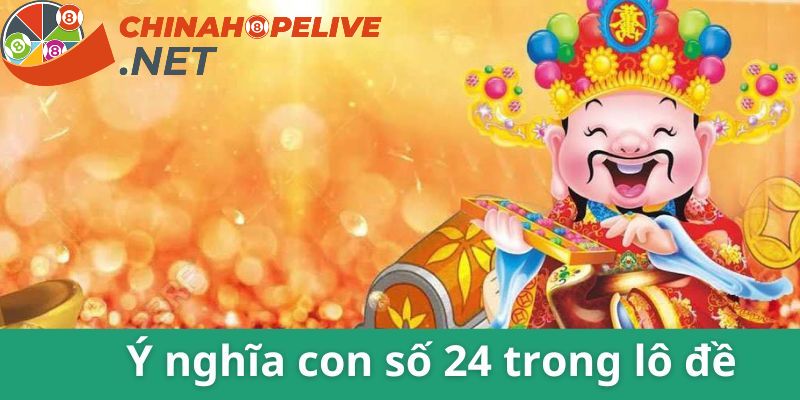
L to R: a laughing buddha (笑佛), the God of Wealth (财神), Santa Claus.

They’re fat, they’re red, they appear on posters and as statues, they mean people get stuff. In North America he brings “gifts” in a big sack. In China, traditionally, there’s two of him, and he’s more explicit, holding gold bars, coins and other symbols of wealth, sometimes in a big sack. But I honestly don’t see how the money god and laughing buddhas can compete with Santa.

Santa Rules
In addition to our veneer of giving in order to get stuff, we Westerners do it better than the Chinese in another important way. Typically, Chinese restaurant owners just stick up a poster or set up a statue of the God of Wealth and offer it food, wine and incense, hoping for prosperity in return. Laughing buddha figurines are popular as good luck charms, and you can rub the bellies of the big statues for peace and prosperity. But in North America we’re more creative and effective: we brainwash our kids. We get them buzzed with songs and movies and talk about toys before taking them to sit on a real live Santa’s lap. “Santa” asks them two questions: Have you been good? and, What do you want? — in a mall of all places, at the height of the biggest shopping season of the year. The kids get the point so well they don’t even realize it; it metastasizes into their developing psyches and shapes their human experience for the rest of their lives. It doesn’t matter if they grow up and lose their faith in Santa; it’s not about him. They’ve totally absorbed the idea that our biggest cultural celebration of the year revolves around wanting and getting. In other words, our patron saint of consumerism kicks butt on the Chinese money god. And surely no belly-rubbing-for-peace-and-prosperity on a jolly, golden, laughing buddha can compete with a mall Santa.

But seriously, folks…
You might think it doesn’t make a whole lot of sense to generalize about Santa Claus, the God of Wealth, and laughing buddhas because they seem so fundamentally different. For example, maybe Santa’s not really a god of wealth but of consumerism. And maybe he’s not really our god of consumerism; no one except for kids attempts to bribe, placate, beseech, or otherwise cajole Santa as a spiritual being into enabling our consumption. He’s more like our idol of consumerism; the man-made physical representation of our unhinged desires to consume that helps us focus and realize those desires. And last but certainly not least, Santa is Not Jesus — maybe that’s his real name. He’s our Jesus-avoidance tool; a soothing, comfortably 100% imaginary mascot, employed as a colourful cheerleader to add lighthearted, saccharin distraction to our otherwise obscene consumption, which doesn’t look quite as bad when Jesus isn’t around. I suspect Santa’s a little bit of each. I’m not saying Santa (or gift-giving) has to be this way — it’s not like Santa’s inherently evil — just that he’s currently functioning like an omnipresent consumption mascot on steroids.

Mainland Chinese, by the way, love Santa Claus. They can’t get enough Santa Claus. He fits with the holidays: he wears red, he’s fat, he’s loaded. He means we get stuff. He’s in every other business in Tianjin around Christmas time, where he occupies the same places on walls and doors that’re sometimes occupied by posters of the money god. And how many people could honestly point him out in a police lineup with laughing buddha and the money god? So you see, we’re not so different after all.

For a look at “Christmas” in China, see:

Share

How your Chinese apartment affects your relationships with locals

By ~
| Cultural perspectives | Soapboxes |

You’re broadcasting a message to your Chinese friends with your apartment whether you know it or not. It’s a message that locals understand loud and clear, because many Chinese homeowners — especially the kind foreigners are most likely to rent from — use their apartments to send a message on purpose.

First Impressions
This was confirmed for us yet again by a Chinese friend of a friend who was over the other night for our mutual friend’s birthday party. The group was mostly foreigners. Someone mentioned how much he liked our apartment, especially some fancy shelving in one of the walls (like many so-called middle class Chinese, our landlady had played interior design with the place when she lived here, so there’s lots of conspicuous design elements around). Jessica said, “Yeah, I really like that, too, but I wish that some of the other things in this apartment weren’t quite so fancy.”

“Why?” he replied, “It looks nice!”

“Well, it’s just that some of these really fancy design elements give people a certain impression here, like we’re really really rich or something…”

“Really?”

But before Jessica could respond, a Chinese guy whom we had just met that night jumped in and said (emphasis mine), “Yes! When I walk into this apartment, my first thought is that the owner is really, really rich. And also well educated. I would think he or she is maybe a teacher, might know about art, or has relatives or friends that know about art and design.”

Jessica told him he was right, that our landlady is a teacher at one of the local universities. He said, “See? You can just tell by the design that this is the home of an educated person with lots of money.” He continued, “I would also guess that he or she is short,” and pointed out a number of the design elements that definitely don’t take height into consideration (in my 6’4″ opinion, nothing in China takes height into consideration! :) ). Jessica laughed at his observation because it’s true — our landlady probably barely clears 5′ tall in heels (though she towers over the landlady we had in Taiwan).

Chinese D.I.Y. Interior Decorating
This kind of interior decorating is a way for “middle class” Chinese to express their enhanced station in life — status symbols, essentially. It can range from the mildly (unintentionally) eccentric, to what you’d expect from a high school design student in terms of taste, to the extravagantly ostentatious (I’m thinking here of one apartment a foreign friend almost rented that had a raised, transparent, orange-lighted living room floor with a rock garden underneath — the son wanted to have goldfish in it but his mom made him compromise).

In the 80′s wearing a watch and leather-looking, non-”Liberation shoes” meant something (it used to be common for people to look down at your shoes after greeting you to gauge your status — that’s only happened to me once here), so did owning appliances like a T.V. or fridge. In the 90′s it was things like electric bikes, pampered pet dogs, and private cars. But as each status symbol becomes too common, people with money have to find new ways to distinguish themselves. Hanging out in ridiculously-priced $tarbucks, buying ridiculously-priced hand bags, and having an interior-decorated apartment shows you’re a step up with money to burn. These things are meant to send a message, but foreigners aren’t naturally tuned in to all of them, especially things like watches, ‘normal’ shoes, and an apartment that isn’t a white-washed concrete box.

Not Our Ideal
We didn’t choose or really even want this particular apartment, although it is really comfortable. Our friends found it for us while we were in Canada with our newborn baby in neonatal intensive care. It’s lower-average for the kind of apartments foreigners rent in Tianjin (our previous apartment made some of our foreign friends uncomfortable), but we weren’t about to tell our friends ‘no’ and ask them to go apartment hunting for us again while we were in Canada; they’d already done us a huge favour. We moved back to China as overwhelmed first-time parents with an infant; just getting here was a serious hassle and we weren’t about to pick up and move. The apartment wasn’t ideal but at the time we had more immediate concerns like how to get safe baby formula and worrying about the air pollution. Since we aren’t planning to settle down here, we decided we’d live in this comfortable, foreigner/rich Chinese apartment for now.

When we first arrived in Tianjin, we wanted an “average” apartment. There’s a few reasons why that doesn’t make a lot of sense (“average” means less given the stark economic disparity between social classes, for example). Nonetheless, we wanted an apartment in which our Chinese friends would feel comfortable, one that they would feel is normal, one that wouldn’t scream “rich, privileged foreigners.” We arrived with this mentality and were more-or-less successful in finding that kind of place. (More about how that played out here, or at the link below.)

Honestly, that old apartment was ghetto — that’s the adjective the average North American would likely use to describe it, and they’d mean it literally. As far as physical facilities was concerned, it would have been in the worst downtown East Vancouver neighbourhood. (This comparison isn’t really fair, though, because while the building and apartment was physically at the standard of a North American inner-city ghetto, the neighbourhood and community was safe, friendly, and generally pleasant, unlike Vancouver’s drug-and-prostitution-infested, crime-riddled downtown eastside.) But our Chinese teachers felt comfortable in it. We knew it matched their own apartments because the buildings and rent were more or less the same; we’d done some surveying before we chose a place.

When we finally do pick a place to settle down in I don’t know yet how we’ll choose, since this time we have children and family concerns thrown into the equation that weren’t there in 2007. But I’ll definitely be aiming for something that doesn’t send quite the same message as our current place.

To read about how and why we originally lived in an “average” Chinese Tianjin city apartment, and how that played out, see:

Share

Cross-cultural harmony, cross-cultural marriage: Can foreigners ever really “understand China”?

By ~
| Cultural perspectives | Culture stress | Love | Marriage | Soapboxes |

The question of mutual cross-cultural understanding — generally and in marriage — came up this week in two separate places. Cindy wrote about culture shock and cross-cultural understanding in marriage (as part of her on-going series about cross-cultural marriage — linked below). In a blogger interview we did for a China travel website they asked if we thought foreigners could ever really “understand China.” I love the way both articles tackle the same general theme from two very different angles.

First, here’s an excerpt from Cindy’s Our Unique Bond #4 (I really hope you’ll go read the whole thing on her blog; it’s fantastic and I cut out some of the best parts here):

Culture shock is the pruning process. It’s the Good Friday before Easter Sunday. It’s the dark night before the dawn. It’s the pain before the gain. But let me be clear on one thing: though culture shock is inevitably painful, it is not inevitable. We experience culture shock only if and when we actually desire to engage with another culture in a meaningful way. I personally know couples who marry cross culturally who don’t make an effort to engage in their spouse’s culture and I suspect they don’t have culture shock issues in their marriage. Just as an expat can live in another culture and exist purely in an expat bubble without engaging local culture, they too, won’t encounter culture shock issues.

And here I break the bad news to people considering cross culture marriages. Gulp. In my humble opinion, you WILL have to make sacrifices and be ready to lose aspects of your culture if you want to make your marriage work. [...] There are parts of my Chinese self, that I can never fully share and relate, with J. Though I try with every effort throughout our marriage. I believe it is ultimately healthy for the relationship to recognize and come to accept this. If you find yourself in a cross cultural relationship, you will have to decide the things you value in your relationship is worth the cost. In my case, I saw a character I admired, a common vision for life, and a deep friendship that bonded us even despite cultural differences.
[...]
Easier said than done. But it is worth doing. Please don’t be the kind of couple who just is content with living life according to one spouse’s culture. You are robbing yourself of the gift of being in a cross cultural marriage. J and I have learned so much about each other, and it has provided us with the invaluable skill of being able to encounter people who are very different from us with respect. And we hope to pass this on to our children to help them navigate themselves in our increasingly diverse yet interconnected world.

Here’s one of my answers from the travel website (China Blogger Spotlight: Getting intercultural with Joel and Jessica from China Hope Live):

Do you think [China/Chinese culture] is something a foreigner can ever truly understand?
Yes and no — it depends what you mean by “truly understand.” I definitely think it’s possible for people from vastly different cultures, like East Asian and Euro-American cultures, to have a deep and satisfying mutual understanding. We can also learn lots about ourselves and our own cultures through the perspectives of people from other cultures. Chinese people have the opportunity, to see things about Canadian culture and society (for example) that Canadians can’t see because Canadians are in their own culture and therefore they are too close to see some things. And the same works in reverse: outsiders in China can see things about Chinese culture and society that Chinese people can’t see because Chinese people don’t have an outsider’s perspective on their own culture. So there’s lots we can learn from one another, not just about one another’s cultures, but also about our own cultures.

Sometimes when people say “understand China” what they really mean is “accept and agree with whatever ‘China’ says or does.” Sometimes when these people hear a foreigner express a “non-Chinese opinion” (especially about sensitive topics), they disregard the foreigner by saying “they just don’t understand China” or “they’re just using foreign thinking to understand China.” I think that kind of attitude and thinking is basically nonsense, and it doesn’t promote mutual understanding. “Understanding” and “thinking and feeling the same” are not the same thing.

The differences between Chinese and Euro-American cultures are very, very deep; often I think people don’t realize how different we really are. Cultural differences are fascinating. However, I think the things we have in common are even deeper, more profound, and more important that our differences. I really believe that it’s possible for Chinese and lǎowàis (老外s) to have solidarity that is stronger and more meaningful than our differences.

Share

Foreign baby in China essentials: IMPORTED BABY FORMULA

By ~
| China: life & times | Family | Foreign baby in China | How to... | Soapboxes |

(I told you so!)

If you have an infant in China and you’re using baby formula, then this is for you.

The Problem

After the 2008 melamine milk powder scandal, in which several infants died and hundreds of thousands were harmed by drinking melamine-tainted baby formula, we heard other foreigners multiple times say, “Now’s the best time buy Chinese milk powder — it’s never been safer.” Thankfully, we knew better.

That kind of thinking is what Chinese people call “using foreign thinking to understand China” — in other words: wrong. Now in 2010 it’s all over the news that 170 tons of unsafe milk powder products that were supposed to be destroyed in the wake of the 2008 scandal were simply repackaged and put back on store shelves. Melamine is an industrial chemical used in plastics and adhesives that also creates false, boosted protein readings on quality tests of watered-down milk powder solutions so that they don’t appear diluted. It also causes kidney stones and kidney failure. Despite the very public scandal, people knowingly repackaged and resold a product that they knew was lethal. Silly foreigners; “you laowais can’t understand China.”

It’s not a matter of being overly cynical about the priorities of China’s highest leaders. The system is broken, or rather, it was never designed to protect and empower individuals and the public in the first place (just the opposite; it was designed to empower the rulers at the expense of the people). Even if high-level leaders have good intentions they simply can’t adequately enforce these kinds of policies. In response to a major international scandal in which babies died, hundreds of thousands were harmed and the public was outraged, they executed a dairy farmer and a salesman, shuffled the responsible gov. officials around, and obviously failed to remove 170 tons of the stuff that caused the damage in the first place. (Those ‘disgraced’ officials are now back in same-level or higher positions.)

It borders on irresponsible, in my opinion, to trust the Chinese system more than you have to. Thankfully, when it comes to baby formula, trusting the system is unnecessary.

Breast milk is best, of course, but if you live in China and your baby needs formula, 怎么办

Our Solution

When we need baby formula, we use Táobǎo to get imported name-brand Dutch formula (inspected by our Dutch friends) for the same price or cheaper than what’s on the store shelves in China. No doubt it includes ingredients made in China, but Dutch babies haven’t gotten kidney stones from baby formula yet.

Taobao.com is the cuter, blinkier, Chinese eBay. Some of your Chinese friends or co-workers most likely have accounts. My Chinese co-workers used to shop on Táobǎo all day before the company blocked the site. Get someone to order imported formula for you or open your own account (opening an account requires Chinese and Táobǎo accounts can be complicated, even for locals).

*Special tip: The first time you order from a vendor on Taobao.com, order a small amount so you can check the product closely to see if anything looks suspicious. You can get fake stuff on Taobao just as easily as anywhere else. If it checks out, you’re good to go! The vendor we use is here.

**Warning: This is not foolproof! By ordering off Táobǎo you’re trusting your ability to spot a fake product. Some fakes can be very well done. Be extremely careful. Ordering imported formula from Taobao is no guarantee, it’s just significantly better odds than domestic formula, imo. For a safer and only slightly more expensive option, see the first and fifth comments below.

If anyone has any other baby-formula-in-China advice, please let us know in the comments!

(This is the first in a series; several more are cued up, in no particular order. We have a baby, so as we discover the tricks of the trade in China, we’ll share them here.)

Related:

Other foreign baby in China essentials:

Share

Older stuff »


You are browsing:

Soapboxes

About

A North American couple with a background in Intercultural Studies tries to make a life in China. This is our coping mechanismblog.

Share on Facebook

We both write, but Jessica only writes when I bribe her. See all of her posts here.

Subscribe/Follow

Enter your email address:

Subscribe

Add to Google

Choose a Topic

  • Baijiu (白酒) (6)
  • Beauty (13)
  • Being Chinese about it (151)
  • Blessings (69)
  • China books & DVDs (50)
  • China plans & prep (11)
  • China web debris (459)
  • China: life & times (280)
  • ChinaHopeLive.net (15)
  • Chinese festivals (49)
  • Chinese history (34)
  • Chinese medicine (16)
  • Chinese movies (7)
  • Chinese songs (10)
  • Chinese take-out (218)
  • Chinglish (22)
  • Christmas (23)
  • Cultural perspectives (158)
  • Cultural re-adjustment (7)
  • Culture fun (148)
  • Culture stress (50)
  • Cute (34)
  • Face (14)
  • Family (62)
  • Friends Far Away (7)
  • Goodbyes (6)
  • How to… (13)
  • Karaoke (7)
  • Learning (55)
  • Learning Mandarin (101)
  • Lost in translation (24)
  • Love (18)
  • M.A. studies (23)
  • Marriage (28)
  • Meta-narratives (99)
  • oh. Canada (7)
  • Olympics (32)
  • People (138)
  • Photo Gallery (58)
  • Photo posts (128)
  • Places (295)
  • Pollution (21)
  • Propaganda (77)
  • Random (3)
  • Running wild in the streets (124)
  • Sex & Sexuality (19)
  • Soapboxes (37)
  • Teaching English (62)
  • Things we've eaten (59)
  • Traffic (13)
  • Travelling (31)
  • Underappreciated genius (14)
  • Translate 翻译

    Latest Posts

  • Defining You (Pt. 2): Pick your poison

  • “Re-LIN-gion” Chinese internet meme

  • Mainland students lining up for Western private schools

  • Happy “Resurrection Festival” 2012!

  • Interview with Prof. Liu Peng on Religious Issues in China

  • Colonialism’s new frontier: Western beauty ideals plague China and the world

  • Brutal Chinese honesty: “fat guy underwear” edition

  • Political inoculation and personal empathy in China

  • China documentaries (Pt.2): rivers, migrants & entrepreneurs

  • Mommy Wars: foreign moms vs. Chinese ayis

  • Chinese “birth tourism” & “passport babies” in Canada

  • The Chinese Communist Party among other, rival faiths

  • China documentaries (Pt. 1): blue jeans and revolutions

  • Asian ‘gendercide’ in Canada — our local paper opens an explosive can of worms

  • Fair Trade iPhones

  • Eaves-dropping on Beijingers in Vancouver

  • Chinese “evil cult” propaganda in our Canadian mailbox

  • Japanese apologies

  • Merry Christmas 2011! (“Is there anything worth believing in?”)

  • The ChinaHopeLive.net 2011 China photo gallery is up!

  • Click here for more.

    Photos

    smallsquare3fireworks1.JPG smallsquare2bug1.JPG smallsquare1pagoda1.JPG smallsquare5lu1.JPG

    Browse our photos here!

    Conversations

    Defining You (Pt. 2): Pick your poison (3)
     ordinary malaysian: "Is the western concept of the self as an..."
     Joel 大江: "Do you have a link for that? I’d like to see..."
     C.: "There’s a guy at the Shanghai Expat site that has a..."

    Foreign baby in China essentials: IMPORTED BABY FORMULA (30)
     Alan: "Hi I have been reading your blogs with interest and for..."
     Katy: "This UK website http://www.britishshoppingo..."

    Chairman Mao enshrined — literally (1)
     George: "How very sad indeed that Chairman Mao would be..."

    Fair Trade iPhones (12)
     Trestle Rider: "Chip is more than right, although conditions in..."

    Forget marketable skills, in China you get paid to be white (5)
     Seth: "Is it really that easy to get “teaching”..."

    Political inoculation and personal empathy in China (5)
     reppac: "Hi Joel, just came across your blog and it makes for a..."

    “Chairman Mao is like a god to us!” (9)
     Harland: "Well, I suppose that excuses the fact that he..."

    Videos

    chlvideo.png

    See the videos page!

    Chinese take-out

    Good good study, day day up!

    瓜子脸

    Pronounced: guāzǐ liǎn
    Means: Melon-seed Face. One of the ideal Chinese face shapes.

    Albert at Laowai Chinese introduces two ideal and two undesirable Chinese face shapes: The Four Faces of Chinese People (women, really)

    - 2012/03/22

    View all

    InterWǎng Debris

    Recent China internet debris.

    Eating Bitterness: an intro to the unprecedented Chinese migrant worker phenomenon

    If you're unfamiliar with the urban migrant phenomenon in China -- as in, the people who make the stuff you buy and their lives -- then China’s Urban Immigrants: A Diet of Bitterness is a fine overview with lots of links for further reading.

    "Chinese metropolises are now home to an estimated 200 million rural-to-urban migrants . . . who occupy a precarious place in the urban hierarchy: while urbanites appreciate their labor, they are less enthusiastic about the migrants’ presence in their cities."

    For more on this topic you can browse our Migrant Workers category, or if you like documentaries, see these reviews of two good documentaries on migrant workers:

    - 2012/05/10

    Chairman Mao enshrined -- literally

    When one of my young, very privileged Party-family students passionately told me, "Chairman Mao is like a god to us!" I understood he meant it as a simile. And the god metaphor is common when discussing Mao and his Cultural Revolution personality cult. But as it turns out, in some incredible irony, some other Chinese mean it literally. I heard about this before, but this is the first time I've found pictures -- Mao actually enshrined in a local temple: Mao Temple in China – Chairman Mao Becomes Local God.

    For more about Mao and the Mao Era, you can browse these topics:

    - 2012/05/08

    A deeper look into the dynamics of living with Chinese propaganda

    Two insightful posts from Seeing Red in China, which is probably my current favourite China blog, about living in an aggressively and explicitly propagandized environment, and how Chinese try to deal with it. The propaganda still works, but in ways different than us foreigners probably tend to assume. Without further ado:

    I tell [my daughter] that she must not be afraid to take a clear moral stand. “If you see someone is being bullied,” I said, “speak up for that person.” “Be the keeper of the good.” [But] Chinese parents would have to think twice, three times, or even lose sleep, if they are to instill these values in their children, because these qualities won’t serve them very well in the Chinese society.

    We've written lots on propaganda, mostly the Chinese kind, including translations of the propaganda we've encounter in China. You can find it all in our Propaganda category.

    - 2012/05/06

    View all

    What's this?


      RSS
      ~
      LEGAL:
    All text, images, and photographs are the sole property of the authors unless otherwise indicated.
    Copyright (c) 2005-2012 ChinaHopeLive. All rights reserved. Contact Joel and Jessica for copyright details.
      ~
      Increase your website traffic with Attracta.com
      ~


    Best Blogs Asia Directory Featured in Alltop living in China News blogs & blog posts

    Switch to our mobile site