One Tianjiner’s first impressions in America

By Joel ~
| Cultural perspectives | People | Regular Zhou |

One young Tianjiner gets ready to celebrate his first Spring Festival away from home, and talks about the adjustments he’s faced during his first semester in America.

(Guāngyuǎn was profiled last May for the Regular Zhou column in a Tianjin expat magazine. Here he is nine months later, finishing his first semester in Iowa and looking forward to his first Spring Festival on foreign soil.)

Christmas can be one of the toughest times of the year for Tianjin’s foreigners. It’s at Christmas when we often miss our families the most, along with the friends, food, fun, and traditions that make Christmas one of the most meaningful dates on our calendars.

But Tianjin’s wàiguórén (外国人) aren’t the only ones missing out on the major family and cultural event of their year by living in a foreign land. For Tianjiners like Guāngyuǎn (光远), this winter also means passing the most meaningful time of year far away from home. Like us, he’ll be away from his family and closest friends, huddled together with a small group of fellow foreigners, trying to produce a traditional holiday meal without all the proper ingredients in a country that has no clue how to really celebrate the holiday he holds dear.

Spring Festival in the Excited States of America
When I first interviewed Guāngyuǎn early last year, he’d just received acceptance letters from several American university post-graduate engineering programs. He’s since moved to the U.S.A. and is just finishing his first semester at Iowa State University in Ames, Iowa. That means he’s gone from Big Brother to Uncle Sam; from Tianjin with its 7 or so million to Ames with its almost-51,000; from the Chinese exam-centered education system to America’s emphasis on independent thinking and self-expression. Once he finishes his first semester, it will be time to start preparing for Spring Festival. Here’s how he envisions it:

“In America, I have made a lot of new friends. I think at the first spring festival in USA, I plan to have a good time with my Chinese friends. Maybe to have a party is a great choice for us. Of course, we will invite some American friends and other international students for sure. In the party, I and my friends will cook Chinese foods for us and the customers. Considering that Ames, the location of Iowa State University, is in winter and just like the winter in Tianjin, the hotpot and dumpling, Chinese traditional food, is necessary. At that time, we will enjoy warm food and warm environment.

“Since I was born, I have celebrated every Spring Festival with my parents and relatives. There is no exception for this. I guess, to have Spring Festival is a great experience for me, although I have a little bit homesick. So as what I did (拜年;bài nián; call or visit to wish someone happy New Year) in the last Spring Festival, I will give the call to everyone who cares me and tell them that I am great in America and don’t need to worry about me. Maybe the people in my family will feel different… ‘Where is Guāngyuǎn?’ Haha.”

Living Life Elsewhere
Guāngyuǎn knew that adjusting life in the U.S. wouldn’t be easy, and he shared his feelings about it before he left:

“I worry about the absolutely strange environment, strange people, and strange culture that I will face after I land in the USA, which is full of challenges for me. Therefore I feel excited and nervous.

“I plan to live the community outside the campus, so my roommate and neighbor might be western people. …it is the first step for me to overcome language difficulty and get involve western culture and society. These are related to many living things, like buying the stuff, communicating with native people, and getting used to western living style. …I will face similar problems in the campus. To better understand what the professors talk about, I need not only to ask questions in class but also to communicate with other students after class positively. Other than these, there are great differences with class, homework and exams between American universities and Chinese ones. Above all… culture shock and language are great challenge for me and therefore make me a little bit nervous. But I believe I can do it better as soon as possible. Maybe one day I will feel comfortable to live outside the ‘Chinese culture bubble’ in the future. Every time I think that this day is coming, I am very excited.”

guangyuan06I caught up with Guāngyuǎn for a second time as he was preparing for his semester’s final exams. I asked him about his cross-cultural experience so far, and what sort of impression he’s getting of Americans and life in the States.

Tianjin, China vs. Ames, Iowa
“America’s big cities are noisy and bustling just like China’s, but I’m just at Ames, a small town [population 51,000]. In China this kind of place is considered a small town. It’s really peaceful, so much so that every day you can go out on the street and often not see anyone.”

Daily Life Differences
“When I was in Tianjin and Beijing, I didn’t need to rent house myself. Also students hardly ever needed to cook their own meals. But when I came to the U.S. it wasn’t the same. You have to go yourself and rent an apartment and purchase furniture. Here there are very few Chinese-style vegetable markets, outdoor markets and so on, so every week I have to go once to the supermarket and buy everything. And I still have to learn to cook. Since I’ve arrived here I’m already slowly learning how to cook some things.

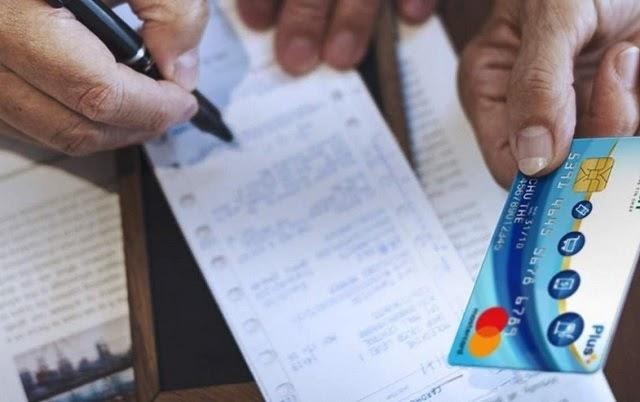
“A lot of things are new to me, I’m learning how to go do them. Regular people in China don’t need to use credit cards and checks to make payments, instead they use cash, but in the U.S. it’s just the opposite. In China you very seldom see bills and such, but in one month in the U.S. you will receive every kind of bill (rent, electricity, gas, cell phone, credit card…). Anyway, in the U.S. these are all simple, you can pay everything online. It’s really quick and convenient. Also in the U.S. you have to learn how to find a good deal. Sometimes so many things are so cheap you just stand there amazed. A laptop valued at over 10,000 in China is only 5000 in the U.S. In the U.S., cars are as common as bicycles are in China. If you don’t have a car, you’ll feel it’s really inconvenient. But I’m fortunate to live in Ames where there’s good public transit. But even here driving a car is an essential skill.”


Living with the Yanks
guangyuan07“Americans like things simple and direct, not implicit like Chinese people. Americans first speak their mind and then try to explain themselves. Chinese people are just the opposite. The food American’s like is all simple to make, not like Chinese people who like to prepare meals pan-fried. Thus in the supermarket you can see a lot of half-finished food products (however China domestically now also has this kind of similar trend).

“Americans like to have ‘excuse me,’ ’sorry’ ready on the tip of their tongue, if they feel they caused someone inconvenience the just blurt it out. In the U.S., grass is for people to walk on, sit on, or lay on – this is really different from China. In the U.S., pedestrians are ‘king’; cars all have to make way for you.”

Comparing the Chinese and American Classroom Experience
“American classroom atmosphere is more vigourous than in China. Students in class can ‘at any time’ ‘call out’ their own viewpoints, problems, and ideas. American education pays particular attention to making students learn to think independently but at the same time learn team cooperation. Here the homework and projects arranged by the teacher all make the students be part of a group to accomplish something. They also ask the students to elaborate on their own points of view, so in class student presentations are a common thing.”

guangyuan01Adjusting to a New Cultural Context
“In life, if you try to learn and imitate you’ll quickly be able to adapt. I feel that concerning the foreign students, the hardest thing to adapt to are the cultural and the educational issues. First of all, being able to use the language is a significant concern. Once you’re able to easily use English to communicate with others, then you’re really able to get over your culture and education shock. To make progress with cultural and educational differences, you also need to actively go with American classmates and communicate for a long period of time. Then you’ll naturally adapt.”

I asked Guāngyuǎn he feels he’s changed a little bit since he’s been in the U.S., but he doesn’t seem to think so: “Actually rather than say I’ve changed personally, it’s better to say I’m just gradually started getting used to American life and study.”

What Does a Tianjiner in America Miss the Most?
“Speaking about what I miss the most, it’s has to be Chinese food, especially the food my mom cooks. When I go back to China I’m going to gobble down special food, but at the same time I need to raise the level of my culinary skills.”

Favourite American Food
“My favourite American food is sweet potato, along with Mexican chicken burrito (seems like that’s Spanish food?). American home-baked cookies are also really good.”

Making Do
“I think, every international student has the same feeling and experience. You and your wife live in China now and don’t come back to the motherland to celebrate Thanksgiving and Christmas. But this is the life and it is changing. Therefore, we have to adapt and learn to enjoy it.”

Related Articles:

  • Share/Save/Bookmark

Meet Mrs. Shǐ – Striving Hard for a Stable Future

By Joel ~
| China: life & times | People | Places | Regular Zhou | Tianjin |

Mrs. Shǐ is December’s Regular Zhou. The magazine seems to share similar feelings with one other critic who doesn’t appreciate having China’s blue collar folks telling their stories in foreigners’ magazines. So I guess from now on they’ll be “above-average Joe’s,” or at least for the next few months while we’re in Canada and I have to interview over e-mail.

As usual, the blog version below has better photos and includes the more interesting content. But I still haven’t included any of the horrific Cultural Revolution stories she told, or her complaints about the Olympics.

Striving Hard for a Stable Future

How one Tianjiner works daily to give her son a better life, one plate of chǎo bǐng at a time.

Mrs. Shǐ is my favourite kind of Tianjiner. She’s warm and engaging, ready for conversation, and patient with language students’ pathetic Mandarin. If you’ve got the time and the ear, she’s willing to share all kinds of stories from her experiences growing up in Tianjin during China’s tumultuous last 50 years. Plus, she makes great chǎo bǐng (炒饼) and dàbǐng jīdàn (大饼鸡蛋), able to warm both the stomach and the heart.

Mrs. Shǐ, whose given name evokes images of mountains with colourful clouds, sells breakfast, lunch, dinner, and the occasional midnight snack from her xiǎomàibù (小卖部), the little shop she’s carved out of a first floor apartment that she shares with her 25-year-old son. She used to sell food from an outdoor stall in a bustling street market for eleven years before the market was cleared away in a nationwide sanitation campaign.

I’m often there at lunchtime, when the tables and stools out on the sidewalk are filled with hungry college students, vegetable market shoppers, and workmen. Inside the walls are lined floor to ceiling with shelves that overflow with snack food, cigarettes, alcohol, and seemingly random items like a large bag full of beer bottle caps. In between the newly-acquired fridge and a small low table with plastic stools there’s just enough room to take three steps to the cooking area, where she single-handledly produces dozens of meals every day.

Daily Routine
She gets up at 5:30 every morning, arranges the displays, tables, and chairs on the sidewalk, and prepares to start serving breakfast at 6am. After breakfast she makes some purchases, cuts up cabbage and cucumber, and gets ready for the lunch rush. After lunch she’ll rest her head in her arms over the freezer and take a nap. She finally closes shop at 11pm, but that doesn’t always stop customers.

At 12:30am they knock on my door and I have to sell: “Ayi! Ayi! I want dàbǐng jīdàn!” I haven’t counted how much I sleep at night. I close shop, eat dinner, shower, drink some water, watch a little TV, then go to sleep at I don’t know what time, maybe 1am or 2am. For twelve years I’ve managed like this.

Growing Up
Her living situation today is better than it was in past decades, when she remembers food rationing and being unable to buy things, even if you had the money. Still, some of her favourite memories are of her childhood in Tianjin’s “South City No-Man’s-Land” (南市三不管儿 / nánshì sānbùguǎnr), which until recently was one of Tianjin’s most well-known historical neighbourhoods, famous for its noisy, packed street markets containing all manner of food and entertainment. Nanshi Food Street (南市食品街 / nánshì shípǐn jiē) now sits near where she grew up as the middle child of seven.

When I was little I was pretty mischievious, even though I was a girl. I was a tomboy. Growing up in Nanshi was good. I could talk about Nanshi from morning ‘til night. It was really rènao (热闹 / loud, bustling, lively), especially in the evenings. There were wrestlers, storytellers, hot rice vendors, soup vendors, all crying out, it was fun to hear. You could buy big snails, five or six for two máo ($0.03). When we were small we couldn’t cook; we’d just go to the food vendors.

I had my son in Nanshi. When he was one-and-a-half, in 1983 on May 26, I moved to our current place. That was when they built Food Street and assigned us housing according to the number of people in our family. Now I have my own house to live in. In the old place I didn’t have my own room, but I like the old place. It was rènao and convenient. Now it’s already gone; it’s all Food Street now. It’s been more than twenty years, but I still cherish the memories of Nanshi.

Future Hopes
The turbulance of the past still impacts her life today, as it does for millions of Mainlanders from her generation. When the Cultural Revolution broke out she was just starting middle school. That means she essentially never had a chance for a real, normal education, but still has to make do in today’s market economy. “Long live Chairman Mao” is the only thing she can say in English. She’s come through hard times, and those life experiences shape her hopes for the future:

I wish my son was able to go abroad, like the way you came to our country. But I can’t be too idealistic. I don’t have desire or hope anything for myself. I just hope my son’s future is able to be good. I don’t hope that in the future he becomes a boss or whatever. Just so long as he doesn’t have to have the kind of difficulties I’ve had it’s fine.

My most important desire is to hurry and make money so my son can buy his own place and get a wife, and have a stable life – a little bit better life. Right now I feel tired, but I can’t stop because life pressures are too great. My son is going to university and working, earning his own tuition.

Foreigners
I can’t resist asking Mrs. Shǐ what she thinks of foreigners:

I’ve had contact with Japanese, Americans – I’m in contact with a lot of foreigners. We get along really good. Aside from nationality, we’re all friends, and also all neighbours, right? It’s just our skin colour is different. I wish foreigners and us would talk and communicate more.

  • Share/Save/Bookmark

No-go zones: what we avoid talking (and writing) about in Tianjin

By Joel ~
| Being Chinese about it | China: life & times | Learning Mandarin | People | Regular Zhou |

Several months ago I interviewed a former street-food vendor for the Regular Zhou column. My Chinese isn’t that good, so I have to get help transcribing the recordings into Chinese. But this time there was a problem. After hearing what this woman in her 50’s had to say, people are refusing to help me transcribe it.

If the interviewee talks into a conversation area that I have no vocabulary for, talks too fast, too unclear, uses bad grammar or uses too much Tianjin dialect, they can lose me pretty quick. Usually I transcribe as much of the interview as I can myself, and then get help filling in the gaps. Then I translate it into English, get help with the difficult bits, and from the English write the column. It’s monstrously tedious, and not at all worth it merely for the column itself, but it’s language practice and the people are interesting.

During the semester finding transcription help is easy because there are local university students at our school who have to log hours practicing teaching foreigners Chinese. This means free extra class/practice for us Mandarin students; we voluntarily sign up for as many hours a day as we want! All the previous Regular Zhou articles had their help. But during the summer semester our “language slaves” (we mean that affectionately) were gone and I had to ask others for a favour.

First I took an hour of regular class time and asked one of my real teachers to help me. After listening for a bit he started saying, “天哪!” (tiān nǎ / “Heavens!”) and laughing in the way Mainlanders do when they’re embarrassed and/or uncomfortable. He started dragging his feet and making it quite clear that he didn’t want to do it, so I gave up (I didn’t want to waste class time on this anyway). Next I tried a local friend, who was a Regular Zhou himself. When he came to certain sections, he’d just tell me, “This part is useless. It’s not interesting. You don’t need it. Let’s skip it.” He made the whole process so burdensome that I was happy to have him stop helping. For my third attempt I took a long shot and asked the editor if anyone on staff could transcribe it for me. He said sure, and had me email the audio files to one of the magazine’s local staff. She flat out refused after listening to it, saying it was way too sensitive. So this interview has been on hold until last week, when the local university sent over a fresh batch of language slaves.

Most school days this semester I do two or three hours of real class, two hours of free practice with the local students, and now one extra hour on this transcript (it will only take a few hours total to finish). For most of these practice sessions I’ve had the same student. We’ve gotten on really well, and he’s willing to help me finish it. We’re about 3/4 of the way done. When he came to the sensitive sections, I had to reassure him that I wasn’t going to publish the embarrassing stuff and even if I wanted to I couldn’t because they’d censor it out anyway. He said he was worried that it would make it into Western media. I told him don’t worry, I’m not a real writer and no Western magazines or newspapers want my stuff. He was still afraid someone might steal it from me and publish it in Western media. I told him they already have lots of material like this, plus now there’s a bit of backlash against ‘China bashing’ in some English-language media.

So what was the terrible, forbidden material? I already knew that the woman had talked about her family’s experiences during the Cultural Revolution. At least one of her siblings was sent “up the mountain and down to the countryside” (上山下乡 / shàng shān xià xiāng). Someone was killed, and someone committed suicide by jumping off a building, but I couldn’t catch all the details on my own. The magazine staff and my real teacher had reacted to this section, I think. But that’s not the offending section beside which this student wrote “careful” and marked off with brackets.

It turn out this former streetfood vendor who now sells hot lunches out of a 1st floor doorway had some complaints about how the Olympics are irrelevant to her life except for the negative impact on her livelihood. The citywide pre-Olympic facelift made it harder for her to make a living, and she thinks they were wrong they way they treated people like her. That’s the taboo content that people didn’t want me to see and don’t want me to write about.

The student who’s helping me trusts, or at least hopes, that I won’t take this material and use it to intentionally make China look bad. He’s right, plus I appreciate him taking the chance and helping me out. But I suspect that he and I may have very different ideas about what counts as fair, appropriate, non-malicious, well-intentioned writing. (I realize that foreigners are only one of their main audiences, but I wish people here could see that overly-sensitive censorship itself makes a much worse impression in the eyes of Westerners than whatever the particular content is that they’re censoring.)

After we’d transcribed this section and had our little talk about being careful with it, he looked at what she’d said and remarked, “She’s right.” Not that it really matters, because by the time her profile makes it into the local expat magazine, it will be safely saccharin-ized.

I’ll post a slightly more interesting version on the blog when the time comes. After all, she’s quite a character, grew up in Tianjin’s “no man’s land” hutongs (南市三不管 / nán shì sān bù guǎn) and has lived through a lot (same generation as “Old Lu”).

  • Share/Save/Bookmark

National ‘Face’ & Local Sensitivity (Part 2): One hour of criticism on the “Regular Zhou” column & Tianjin Olympic interviews video

By Joel ~
| China: life & times | Cultural perspectives | Culture stress | Regular Zhou |

I arrived in class one August Friday morning, my teacher immediately launched into an hour-long criticism session of my Regular Zhou column and the Tianjin Lǎobǎixìng Olympic interviews video. Turns out she’s not a big fan. I won’t try to rewrite the whole conversation, but I’ll try to summarize her complaints because I think they’re culturally revealing.

I’d suspected that the video hadn’t been a big hit with the teachers because none of them had given me any feedback about it at all, even though most of my past and present teachers had seen it. That seemed conspicuous, but I didn’t see this coming. She told me she was telling me as my friend and as my teacher; she wasn’t at all rude by Chinese standards, but it quickly became apparent that our viewpoints are miles apart.

I think her objections are interesting because to her they were obvious, though I was caught completely by surprise. Looking back, I think the real complaint underneath it all is that she didn’t like the view of China that my articles give to foreigners.

Complaint #1: The purpose of writing people’s stories
She started off by asking me questions about how much contact I still had with the people I’d interviewed, and if they were my friends or not (looking back, I suspect she was testing the waters to see how much she could diss them). Then she launched into a mini lecture on the purpose of writing people’s stories in magazines, which she assumed applied to both Chinese and Western media. The obvious purpose of interviewing people and writing their stories, she said, is to give the public a good example to follow; to give the reader a good feeling. I should pick successful people and write success stories of people overcoming obstacles and achieving their dreams, and I should write the articles in a way that makes them look good.

After laying that out, she proceeded to compare my choice of interviewees and the content of their stories to that standard, demonstrating how I was failing to meet the obvious and apparently universal expectations and purposes of writing these kinds of articles. To emphasize this, she dissed my interviewees, saying how they don’t work hard, they complain about their wages, they’re poor, and they aren’t good examples.

All the talk about deliberately making people into an example led into complaint #2.

Complaint #2: Fake is better and expected
When I responded to her first volley, I tried to delicately explain that foreigners see that sort of thing as “fake,” and they aren’t very interested in a nice but fake image (I was gentle using “fake” because I was afraid it would come off sounding derogatory). But instead she literally defended “fake,” which surprised me, saying that this was a big cultural difference. (Obviously North Americans do prefer fake in their media, but in a different way.)

I brought up the example of when I first bought flowers here for Jessica. They came perfumed, and the shop lady put glitter sprinkles all over them right before she handed them to me. To us, it makes no sense to ruin the beauty of the flowers by faking them up like that. But to Mainlanders, that makes the flowers even more beautiful. Wedding decorations go the same way. And the same thing happens with the Great Wall; Mainlanders like the Disney-fied, rebuilt portions, and foreigners prefer the “real” Great Wall – the untouched, crumbling sections. But my teachers already knows all this stuff and just doesn’t agree (she’s been teaching foreigners for a few years now).

Complaint #3: Don’t give troublemakers opportunities to make trouble
I think she tacked this point on to her argument near the end when she saw that I wasn’t being convinced: Didn’t I know that there are lots of people who are looking for things to criticize and make trouble about, and even if I’m not deliberately writing bad things, I’m not being careful and they could easily make it look like I was out to make China look bad? Did I know what they could do to me? (Things were suddenly taking a slight turn for the dramatic.) Since it’s the Olympics it’s a very sensitive time for China (no kidding!), and I should do everything I can to avoid giving bad people an opportunity to make trouble.

In the end, she was upset because I wasn’t deliberately making China look better by ignoring the more common people and selecting only the better-looking exceptions to present as examples. Giving foreigners a more accurate image of China isn’t what my teacher, and a lot of other Mainlanders, seem to be interested in.

(P.S. – Obligatory caveat: While a lot of people here share similar feelings to my teacher, there are also plenty of Mainlanders who would disagree. There’s plenty of variety of opinion in China, and when that variety crosses our paths in any sort of significant way, I’ll blog about that, too.)

  • Share/Save/Bookmark

Meet Liú Wěi – Coming of Age in a Changing China

By Joel ~
| China: life & times | Olympics | People | Places | Regular Zhou | Tianjin |

(Liú Wěi is August’s Regular Zhou. Click the photos to see them bigger.)

Coming of Age in a Changing China

The recently-inserted trees and their bracing poles are blocking our view. We don’t mind, though, because two green-shrouded half-finished high-rises tirelessly belch noise and dust directly across the canal from the park bench we’re sitting on. “Tianjin is a big city in China,” says Liú Wěi (刘伟), sitting next to me and talking over the rumble of construction. “Its development is rapid and widespread; it’s not like it was before.”

Liú Wěi is a born and raised Tianjiner. He’s only 25 years old, but that’s old enough to remember a very different city. He remembers when food tickets were still in use, public transportation was cheaper and the buses more rundown. It was a time when, to him, society seemed in better order. He calls the changes and development especially xùnměng (迅猛), which could be translated “rapid and violent,” but he doesn’t mean it negatively. To put it another way, Liú Wěi remembers elementary school days when there where hardly any foreigners to be seen in Tianjin, but now he learns swing dancing with some on Thursday nights.

For Tianjin and the rest of China, rapid development means much more than just an altered cityscape and wanton consumerism. It’s no secret that since the beginning of the 1980’s and the advent of China’s Reform and Opening (改革开放 / gǎi gé kāi fàng), the gap between the newly rich elite and the poorer masses has been widening. While almost everyone in China enjoys better living standards than before, Mainlanders are also navigating a rising tide of economic disparity; some sink, some sail in luxury, and others tread water while scrambling to build makeshift rafts. In Tianjin you can see them all, and Liú Wěi is among them.

On the other side of the tracks
Liú Wěi was born, raised, and educated in Tianjin’s Hedong district (河东区). His home, primary, and middle schools were within walking distance of the “back plaza” behind the old train station (后广场). For fun he and his classmates would play hide-and-seek, marbles, or go to the train station and watch the trains. The furthest he ever travelled was Quànyè Market (劝业场), which is no more than a bike ride’s distance from his home.

When I was little life was very happy, very simple, not like today, busy with so many matters… I really cherish the memories of my childhood. It was a happy time.

After middle school he studied property management at a vocational training school. Since graduating in 2003 he’s worked in a supermarket, a clothing factory, sold solar powered water heaters. He currently works as a security guard (保安 / bǎo ān) in Tónglóu (佟楼), a half hour bike ride from home.

A working man, with his world on his shoulders
Liú Wěi and his parents moved into a two bedroom apartment in Hebei district a few months ago. Long before he was born, his parents were each sent “up the mountain down to the village” (上山下乡 / shàng shān xià xiāng) for about four years during the Cultural Revolution (文化大革命 / wén huà dà gé mìng): his father to Inner Mongolia and his mother to Héběi province. Afterward his father worked in a T.V. factory and his mother for a construction company. He worries about them.

My parent’s health isn’t especially good. They’re already retired, and wile away the time at home. …Our family’s situation isn’t especially good. My parents’ retirement wages only add less than 3000元 ($438). My wages aren’t especially much. In one week I sometimes work 48 hours, sometimes 36. One hour is 6元 (less than $1), one month around 900元 ($131). In one month I only have half a month’s work. I don’t have a car and don’t have a house. My income isn’t that high. My future plans – I’m very worried about my future.

Now I want to go to school at Tianjin University. They have an adult education college. There are too many non-local university students and job seekers. The population is too big, so it’s very hard to find a job, not like America and European countries. If I’m able I want to go to university and afterward find a good job. I want my friends and relatives to be healthy and happy each day. I plan to look for an ideal job – then I won’t have to worry about being able to find a wife. I hope my parents can be really healthy and that our household starts to become prosperous. I just wish to pass each day happily.

Despite the pressure, he still finds some time to relax.

When I’m not working I just study at home or play with friends, go online or go to a bookstore. When I have spare time I like to go online and play games, or talk with friends, or look for information on ways to get better employment, and also read news on China’s current situation with foreign countries.

The Earthquake, the Olympics, & a patriotic heart

Right now I care a lot about the Wenchuan, Sichuan great earthquake issue. …This is an extremely difficult and especially big affair. Everyone is paying close attention to the circumstances of the earthquake disaster area’s common people… Whoever has money sends money, whoever has strength sends strength, whoever has things sends things. This shows the united spirit of the Chinese people. ‘When one place has trouble, all places provide help’ (一方有难八方支援 / yī fāng yǒu nàn, bāfāng zhīyuán).

China holding the Olympics utilizes a lot of manpower and financial and physical resources. The Olympics doesn’t assist China’s common people very much. It mainly expresses China’s place in the world, by showing that China can run this Olympics well. The Chinese people are extremely concerned with this matter, however, heaven isn’t helping out (天公不做美 / tiān gōng bù zuò měi). Since the earthquake a lot of Chinese people have lost confidence regarding the Olympics. But I feel we ought to transform our sorrow into strength, and strive as much as possible to manage this Olympics well.

You are warmly welcomed to harmoniously enter Tianjin life!
Liú Wěi has lots of advice for Tianjin’s foreigners:

Foreigners who come to Tianjin must assimilate (融入 / róng rù / “harmoniously enter”); they need to enter into our Tianjin lifestyle habits and social customs. …When you come to Tianjin, you are guests of us Tianjiners. We warmly welcome you to come to Tianjin to study and work!

Tianjiners have plenty of poor people and plenty of rich people – of course the people with cars are rich people. …Foreigners should have lots of contact with regular people. Of course, Tianjin city has its good aspects and its bad aspects. One bad aspect right now is that there are a lot of thieves… so don’t go too often to really crowded places.

You know right now there are nice people and bad people. You need to understand Chinese people, see who is a good person and who is a bad person, what kind of character they have. …You must be clever and see people clearly, and then you can make friends with the good people.

Liu Wei went on camera to answer questions about the Olympics in this video.

  • Share/Save/Bookmark

Meet Guāng Yuǎn (光远)! (a.k.a ‘Shine Far’)

By Joel ~
| China: life & times | People | Places | Regular Zhou | Tianjin |

Shining Far: A Tianjin Son Lives Up to His Name
This polite, soft-spoken, but not too timid 24-year-old has “mustered a lot of kung-fu” (下工夫 – xià gōngfu) during his life as a student and recently achieved something millions of Mainland Chinese young people can only dream about: acceptance to an American university’s PhD program and the knowledge that his parents are immensely proud of him.

Lest foreigners think that all privilege and advancement in China is acquired through guānxì (关系: ‘connections’) or through what might be considered other, less-than-noble means, let Guāng Yuǎn (光远) and his family serve as an example of another long-respected cultural tradition in China: meritocracy. Those who do exceptionally well in school and outshine the “cruel competition” (his words) can attain coveted opportunities.

Guāng Yuǎn’s life so far has been dedicated to his studies. He’s always felt his parents’ high expectations and has lived with strict limitations on his free time since primary school. But he finally saw some payoff when acceptance letters from not just one but two American chemical engineering PhD programs arrived this winter, both offering to waive tuition fees. His achievement required a long, disciplined effort with more weekends in the books than on the basketball court. But with his future shining far and bright before him and the proud smiles of his parents supporting him, the sacrifices feel worth it.

A Hometown Boy

Guāng Yuǎn, whose name suggests a bright and promising future (光: light, bright; 远: far), grew up in the neighbourhood where Mr. Lù fixes bikes (Mr. Lù was featured in March’s column). A lot has changed during the two decades that Guāng Yuǎn and his parents have lived here. The canal, seen from the east side of his family’s apartment, is much cleaner and lined with trees. The west side windows open onto a tree-filled, exercise equipment equipped, community “backyard,” which every morning fills with retirees practicing tàijíquán (太极拳) and other uniquely Chinese forms of exercise that foreigners often find curious. Every month sees additional parked cars clogging neighbourhood paths that were originally designed for pedestrians and bicycles. Muffled, thumping bass from a flashy, stickered sports car occasionally invades a local soundscape still punctuated daily by clear, echoing calls for cardboard and the rhythmic squeaking of the recyclables-collecting sānlúnchē (三轮车: the pickup truck of bicycles).

Retired couples, kindergarten students, and a pair of foreigners share his family’s stairwell. A migrant worker camp currently sits within spitting distance of the stairwell entrance. From his bedroom window he can see the neighbourhood boys shout through the occasional game of basketball or football (soccer). For the last several years Guāng Yuǎn has missed a lot of this because he’s only able to spend time at home between semesters. But this place holds his fondest memories, which centre on time with extended family during Spring Festival:

During that period the house is full of relatives and I can play with my cousins. Actually there are two things that impress me deeply. One is that I can get many 压岁钱 (yāsuì qián – money given to children during the Spring Festival), and I can buy my dream stuff. The other one is making dumplings, which was very interesting in my childhood. As the pace of life gets faster, making dumplings at home is more unusual and therefore it is an awesome memory.

Next Stop: The Excited States of America
Of course, these days he spends most his time looking forward to the future, which includes several years of studying and working in the USA. He’s laid out a three-step plan: first, finish his PhD in engineering, and then gain some experience and pad his resume working for a famous American engineering company. How does setting a course for all this unknown territory make him feel?

I worry about the absolutely strange environment, strange people, and strange culture that I will face after I land in the USA, which is full of challenges for me. Therefore I feel excited and nervous.

I plan to live the community outside the campus, so my roommate and neighbor might be western people. …it is the first step for me to overcome language difficulty and get involve western culture and society. These are related to many living things, like buying the stuff, communicating with native people, and getting used to western living style. …I will face similar problems in the campus. To better understand what the professors talk about, I need not only to ask questions in class but also to communicate with other students after class positively. Other than these, there are great differences with class, homework and exams between American universities and Chinese ones. Above all… culture shock and language are great challenge for me and therefore make me a little bit nervous. But I believe I can do it better as soon as possible. Maybe one day I will feel comfortable to live outside the ‘Chinese culture bubble’ in the future. Every time I think that this day is coming, I am very excited.

What about long term plans, after he’s got his degree and worked for a few years in the States?

Third step, come back to China. …China is my motherland and I love her. I will use all that I learn overseas to contribute to China’s engineering industry. I am also the only child in my family and my parents will need my care in their old age.

After I finish the PhD period, I wish I could be a professor in engineering areas like my father. I am proud of my father and his academic career.

And what kind of advice does a guy preparing to leave everything he knows for a foreign country have for Tianjin’s foreigners?

I think every foreigner who comes to China will face culture shock and language difficulty. Firstly, to overcome these, it is helpful to live in the community, positively make friends and communicate with Chinese people from different social backgrounds. And don’t limit youself at home or in the class only to recite Chinese words and doing homework. …visit Chinese families or go around Tianjin City, you will realize that many Chinese expressions bring into your brain unconsciously. Secondly, in everyday life you should talk about any topic in Chinese as possible as you can besides in language classes. Thirdly, maybe you think above-mentioned methods are a little bit boring. So watching Chinese movies with Chinese and English captions are great choice because not only can it tell more about Chinese culture but also can teach you Chinese expression.

There’s one last thing I’ve always wanted to know: When a Mainlander goes to America, are the Americans there still lǎowài (老外), or does the Mainlander become a lǎowài ?

I am a foreigner in US, but I wish one day I have the feeling just like living as a local people.

  • Share/Save/Bookmark

Meet Mr. Cháng – Navigating Fate

By Joel ~
| China: life & times | People | Photo posts | Places | Regular Zhou | Tianjin |

Navigating Fate
In Tianjin today, 3 kuài ($0.42) can get you haircut, a shave, and plenty of fun conversation. If the weather’s good, you’ll also get a view. Visiting friendly neighbourhood sidewalk barbers like Mr. Cháng (常) is one fun way to meet some neighbours and get up-close and personal with the kind of daily local scene too often missed by Tianjin’s foreigners.

Mr. Cháng first greets me with a wave, a big smile, and a “Hello! Wel-come to China!” It’s a beautiful spring afternoon, and he’s set up on the corner outside the stairwell to his apartment. A chicken pecks around in the grass across the lane, while a light breeze ripples the pink-flowered bed sheet hanging over its head. A family’s laundry line, strung between a tree and a first floor window, streaks colour across the red brick apartment blocks that tower over the neighbourhood streets. A bicycle leans against the building beside Mr. Cháng’s small metal barber stand, his spray bottle, scissors, straight razor, and sharpening strap in easy reach. The bicycle’s owner, an older gentleman, sits on a folding chair, his head poking up through the middle of a blue poncho. The electric buzz of Mr. Cháng’s trimmer testifies to the integrity of a long sequence of electrical cords that snake around the yellow, insulated above-ground heating pipes before disappearing up into a third-story window. I sit on a stool and wait my turn. Mr. Cháng corners the older man’s ears with his trimmer and starts making conversation, displaying a surprising English vocabulary that he says he learned from the radio. A few neighbours stop by to chat; they all seem to know him. It turns out that this is how he’s provided for his wife and son for over 20 years.

Mr. Cháng, whose given name could be translated “Prosperous China” (xìng huá – 兴华), started his life as a barber in 1989. Like millions of other Mainlanders, sweeping economic reforms in the 1980’s shattered his “iron rice bowl” (tiě fàn wǎn – 铁饭碗), the government-guaranteed job security that provided the necessities of life. The state-owned enterprise where he watched over construction machinery closed down, leaving him suddenly out of work and with no marketable job training. He still lives in the apartment provided by his work unit (dān wèi – 单位), and that means rent is only 70 yuán ($9.72) per month. Comparable apartments might normally rent for over 600元 ($83) per month, but aside from this benefit he’s on his own.

However, Mr. Cháng is not one to complain about lack of government support or pine for the old days. He doesn’t want or need government welfare, he says. He’s taken advantage of his skills and opportunities to provide for his family, and that translates into what he accomplishes with his scissors, clippers, and conversation. How does he feel his current situation compares with before? His response is a mix of fatalism, acceptance, and determination: “It’s my life” (mìng yùn suǒ pò – 命运所迫; more literally: “forced by fate”).

The beautification of Mr. Cháng’s neighbours usually starts around 9am, going until 5pm in the winter and as late as 8pm in summertime. He’ll cut 25 heads of hair a day in the summer, but in the winter this can drop down to ten, causing his monthly take-home pay to fluctuate from 1500 to 900 yuán per month ($207-$125). And it’s not always blue skies and sunshine, either; in the winter he trades his sidewalk corner in the sun for a chilly 3rd floor stairwell landing under a single bare light bulb. Chinese New Year is the lowest point in a Chinese barber’s calendar. Not only are potential customers preoccupied with the festivities, it’s traditionally considered bad luck to cut your hair during Spring Festival. Mr. Cháng stays in good spirits, though. During his break times, when he’s not napping or watching T.V., he likes to dance, by himself if his wife’s not around. He and his wife place much hope in their 22-year-old son, who is in his 4th year of university studying banking and finance. Their biggest concern is their son’s future job. Although he sometimes jokes about becoming a big, powerful government official, he admits that his real wish is to become a grandpa.

Mr. Cháng, whose English name seems to alternate between Michael Jackson and Michael Tyson, has this advice for foreigners: speak more with Chinese people, and become familiar with Chinese customs, habits, and culture.

If you’d like to meet Mr. Cháng for haircut, I’d be happy to put you in touch!

  • Share/Save/Bookmark

Meet Mr. Lù – a living Léi Fēng

By Joel ~
| China: life & times | People | Regular Zhou |

(This is the first in an as yet unnamed monthly series that tries to introduce foreigners to Tianjin’s “regular Zhou’s” – the 老百姓 (”old hundred-names”; common folk) who form the beating heart of Tianjin. Mr. Cháng, the sidewalk barber, is next. The interviews are severely hindered by my lack of Mandarin and it shows, but it’s still a fun project. This blog version contains some extra details that wouldn’t fit the space requirements in the magazine. Other adventures with Mr. Lù and the old boys club are listed at the end of this article. Mouseover the Chinese characters to see the pronunciation.)

A Modern-day Living Lei Feng
His friends call him a “modern-day living Léi Fēng” (新时代的活雷锋), after the orphaned Mao-era peasant soldier famous for his unselfishness toward fellow comrades and selfless devotion to the Communist cause. The “Léi Fēng spirit” (雷锋精神) lives on today in elementary school textbooks, songs, an online video game, advertisements, and popular imagination as a way to describe people who go out of their way to help others. It also lives on in people like Mr. Lù, our neighbourhood’s bike repairman. The way he and his friends have treated my wife, myself, and even my second-hand, high-maintenance, fake Flying Pigeon bicycle make it obvious why his friends give him this title. This “modern day living Léi Fēng” extends a generous helping hand to locals and foreigners alike, and he has a good deal of fun doing it.

Mr. Lù fixes bikes on the corner near our neighbourhood’s front gate every day from 7am to 5pm (8pm in the summer). But from my perspective as the one of only three foreigners in the community, we should include Welcoming Committee and Host in his job description. I don’t know if giving foreigners a warm welcome and helping them feel at home in China is a big part of the “real” Léi Fēng’s official legacy or not, but it’s certainly a part of Mr. Lù’s. It’s people like Mr. Lù and his friends that make living in a Chinese neighborhood so much more enjoyable for the new foreigners.

My wife and I first moved into this community in April 2007. We were fresh off the boat with a grand total of six weeks of Chinese class under our belts, meaning we could point and mumble in the vegetable market and usually get what we wanted if we’d reviewed the vocabulary beforehand. Aside from that rather necessary survival skill, we couldn’t communicate much of anything. But that didn’t stop Mr. Lù and his friends from inviting us over to sit and chat when they were having lunch outside or from being generous with their food and bái jiǔ (白酒 – the infamous Chinese alcoholic drink akin to “white lightning”). Not daunted by the language barrier, Mr. Lù used food, snacks, drinks, rounds of Chinese chess, and a lot of friendly banter to make it clear that we were welcome to stop by for more than just getting tires patched and brake pads replaced.

Some days he’s drowning in bicycles, and it looks like the repair jobs people have dropped off are laying siege to his mobile tool shed. He’ll fix more than thirty bikes on busy days, but after twelve years of repairing bicycles he’s not intimidated by the heavier work load. He enjoys the extra work and the extra pay that comes with it.

When he’s not too busy he can fit in an after-lunch nap, go fishing on the canal, or chat it up with whoever’s around. Sometimes there can be small crowd; his repair corner can be a social hot spot, and he’s not too stiff to have some good-natured laughs at the foreigner’s expense. Neighbours occasionally choose his corner for a game of Chinese chess, which usually draws more participants than just the required two. As the eighth of nine children and the fifth brother (he has three sisters), I imagine he learned early on how to handle a crowd.

When I first learned of his family’s size, I was shocked. Nine children? But it was the same for his friends. Decades ago Mao had said, “More people, greater strength” (人多力量大), and people were encouraged to have large families and make more workers for the development of the economy. This policy was short-lived, but for Mr. Lù’s generation – people who today are old enough to be grandparents – families of this size are not uncommon. Mr. Lù and his wife have a daughter in her mid-twenties who works for an oil company.

Despite his warm and easy-going manner, Mr. Lù doesn’t necessarily have it easy. He makes 1500 to 2000元 (yuán) per month (about $200-$275), and rent for him and his wife is only a little over 80元 per month ($11) because the apartment is provided through his work unit (单位). However, he no longer has the security he once enjoyed when working for his government work unit at a state-owned textile factory. Like many Mainlanders of his generation, the “iron rice bowl” (铁饭碗) has cracked; the state-owned enterprises that haven’t been closed or sold can no longer provide jobs for everyone. People like Mr. Lù, while still retaining some benefits from the old days like a cheaper apartment, have to fend for themselves financially. He misses the time when he didn’t have to worry about the basics of life, and when it was easier to find work.

When he was younger jobs were easier to come by. He’s worked for several different companies over the years, including a furniture factory and the Tianjin Daily newspaper offices. But he’s older now, and potential employers are less interested. He worries about retirement, which usually happens at 60, and how he’ll manage. More people are riding buses and taxis than in the past, and car ownership is on the rise. No one feels the gradual decline in bicycle use more keenly than bike repairmen like Mr. Lù. He jokes about how hard it is to find a bathroom when working outside, but the gradual decrease in work is his biggest work related difficulty. He wishes that the government could somehow help him improve his life, but he doesn’t receive any work or money from the state.

These worries don’t hinder his generosity. He charges little for his work, and sometimes even refuses to take money, to the point of pulling it out of the money jar and stuffing it directly back into people’s pockets. I’ve not only witnessed him do this to others, but personally experienced it myself.

Mr. Lù hasn’t had a lot of contact with foreigners, but aside from a decidedly unfavourable impression of South Koreans, he says we’re alright, and hopes that we will learn Mandarin well and bring Chinese culture and history back to our home countries.

Additional info on the “real” Lei Feng:

P.S. – I just now delivered a copy of the magazine and some photos to Mr. Lù, and they seemed to really get a kick out of it. He didn’t seem to mind that the editors used the wrong character for his name in the translation (he’s 路, not 陆).

  • Share/Save/Bookmark


(Back to top)


You are browsing:

Regular Zhou

About

A North American couple with a background in Intercultural Studies tries to make a life in China. This is our coping mechanismblog.

Subscribe

Choose a Topic

  • Baijiu (白酒) (5)
  • Beauty (9)
  • Being Chinese about it (92)
  • Blessings (60)
  • China books (39)
  • China plans & prep (9)
  • China web debris (227)
  • China: life & times (130)
  • ChinaHopeLive.net (11)
  • Chinese medicine (7)
  • Chinese movies (4)
  • Chinese songs (6)
  • Chinese take-out (150)
  • Chinglish (15)
  • Cultural perspectives (108)
  • Cultural re-adjustment (3)
  • Culture fun (119)
  • Culture stress (39)
  • Cute (30)
  • Face (10)
  • Family (35)
  • Friends Far Away (3)
  • Goodbyes (6)
  • How to… (12)
  • Karaoke (10)
  • Learning (52)
  • Learning Mandarin (67)
  • Lost in translation (22)
  • Love (14)
  • M.A. studies (23)
  • Marriage (23)
  • Meta-narratives (31)
  • oh. Canada (3)
  • Olympics (31)
  • People (82)
  • Photo posts (93)
  • Places (174)
  • Pollution (8)
  • Propaganda (31)
  • Random (3)
  • Running wild in the streets (100)
  • Soapboxes (26)
  • Teaching English (40)
  • Things we've eaten (44)
  • Travelling (25)
  • Underappreciated genius (10)
  • Subscribe


    Or

    Enter your email address:


    OLYMPICS!

    Some of our Olympics stuff.
     
    Events & Experiences
    Half-baked Comments
     
    Photo Album:
    China's Olympics: Our Experience
     
    See all Olympics-related posts.

    At the moment...

    • Jessica woke up to see the most beautiful smile ever this morning. Yes, I know..you can tell me it's gas...but I won't believe you. I think she totally knows what she's doing when she's smiling! (Updated 3 hours, 57 minutes ago)

    • Joel has three #2 nipples and two #1 nipples. If he drives his mom's minivan home from the Public Health Unit at 60km/hour, at what decibel level will his 6-pound daughter register her annoyance at not being fed right at that moment? (Updated 1 day, 4 hours, 33 minutes ago)


    Share

    Share/Save/Bookmark

    Photos

    smallsquare3fireworks1.JPG smallsquare2bug1.JPG smallsquare1pagoda1.JPG smallsquare5lu1.JPG

    2008 Galleries
    2007 Galleries
    2006 Galleries
    2005 Galleries

    Click the "[+/-]" to show/hide the gallery list for each year.

    Conversations

    Tianjin rated #1 Most Livable City in China; Beijing & Shanghai exposed as overrated gong shows (8)
     The Informer: "Tianjin might even be a little safer than the..."
     RichFromTampa: "After visiting locals 5or6 times and enjoying..."
     Mike Eden: "Shenyang also needs to be mentioned as a large city..."
     chriswaugh_bj: "Oh, I noticed, I’m just adding my..."
     oiasunset: "Make no mistake. I’m actually quite fond of..."

    “No dogs or peasants” (1)
     The Informer: "We have these types of signs in Japan, too. Take..."

    How China changed me forever (3)
     Joel: "Your fiance is from Shandong? They say that’s..."
     Elise: "Love your post!!! I have to admit, after 6 long years..."

    The “Six Why’s” (2)
     Joel: "Your thoughts are in contradiction to essential truth."
     Natalie: "Wait, but didn’t one predate the other. By just..."

    Videos

    chlvideo.png

    See the videos page!

    Chinese take-out

    Have Chinese word you learn!

    小资产阶级

    Pronounced: xiǎo zīchǎnjiējí
    Literally: little property (social) class
    Means: [1] petty bourgeoisie (Mao-era China); [2] Mainlanders who frequent Starbucks (today's China).

    - 2009/06/29

    View all

    InterWǎng Debris

    Recent China internet debris.

    Chinese childhood before and after Reform & Opening

    The Foreign Expert translates a magazine spread where writers recall their childhoods from the ’60s through the ’80s. The essays "follow the thread of China’s modernization and opening up, from the simple, hopeful lives of the Cultural Revolution to the first big influx of products and ideas two decades later" -- Bread, Milk, and Pocket Change: A Brief History of Childhood.

    - 2009/07/02

    The meanings of colours in China

    Someone wrote a nifty little deal comparing the meanings associated with various colours in China and the English-speaking world: A contrastive study of color words in Chinese and English.

    - 2009/07/02

    Sleeping Chinese dot com

    From the perennial hit SleepingChinese.com:

    They talk about "The Sleeping Giant". About "The Birth of the New Super Power" or "The Awakening of the Red Dragon". Often with a strange kind of undertone, which is supposed to frighten us. The reality definitely looks more peaceful.

    - 2009/07/02

    View all

    Links

    Studying Chinese
    China
    Friends & Blogs
    Other Stuff

    Share on Facebook

     Add "Learn Chinese" to iGoogle
    What's this?
    Improve the web with Nofollow Reciprocity.


      RSS
    100% apolitical.
      ~
      LEGAL:
    All text, images, and photographs are the sole property of the authors unless otherwise indicated.
    All rights reserved. Contact Joel and Jessica for copyright details.
    Page copy protected against web site content infringement by Copyscape
      ~
      Best viewed in Firefox 1.5+ at a screen resolution of 1024x768.